-
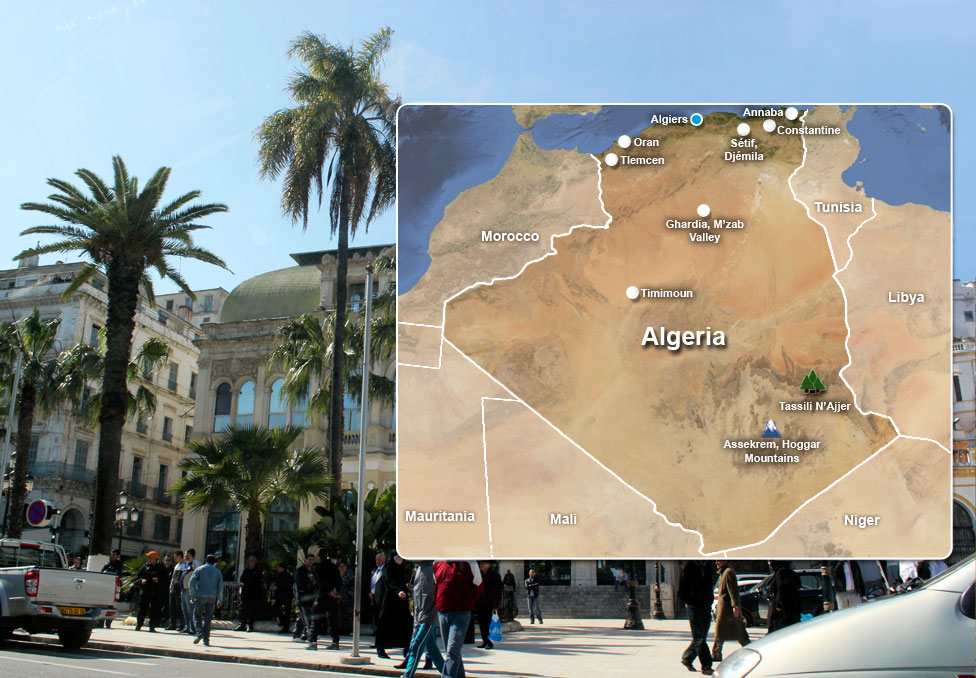
Tlemcen’s Grand Mosque is said to be one of North Africa’s most important Islamic buildings. Begun by the Almoravids – see Morocco History & Politics – in the 11th century (though added to over the many centuries), the mosque symbolises how strong and economically vital this region was during Moorish times. Today, Tlemcen is best known as a university city and centre for agricultural trade, which is why it’s sometimes called ‘the town of cherries’.
-
This ancient city is one of the oldest in Algeria. From the 1st century BC, it became an important Roman town in the Numidia region of the empire – see History & Politics. Today, Constantine's major sights are the deep natural gorge and cliffs around which the city is built and its dramatic bridges.
-
Explore Niger
Click on the map points in Niger to find out more about some of its key cities and geographical features.
-
The city of Oran has a rich heritage involving periods of Turkish, Spanish and French control. This explains the Spanish and Turkish feel of some districts, while other parts of the city contain the buildings of the French colonists. Today, Oran is a lively port and sometimes referred to as the ‘party capital’. The rai music movement – see People & Culture – stems from here.
-
Explore Mali
Learn more about some of the most important places and features of Mali.
-

Explore Morocco
Find out a little more about some of Morocco’s most popular destinations, including the ancient cities of Fez and Marrakesh and the coastal cities of Casablanca and Tangier.
-
Called ‘the white one’ by the French, the capital of Algeria is known for its distinctive white-washed buildings around a wide natural harbour. Used as a pirate base in the 16th century – see History & Politics – the city is now a respectable centre for Algeria’s commercial, political and economic life and home to an estimated 2.8 million people.