Geography & Wildlife
A tropical Switzerland
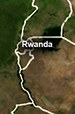
Rwanda is a small landlocked country. Mountains run down its western side and the large Lake Kivu sits along the western border.
While much of the western and central part of the country is mountainous, to the east there is an area of lower land. Here, the River Kagera runs along the border with Tanzania and has a network of marshlands and lakes.
In the northwest, theVirunga Mountain Range is volcanic, with six active and three extinct volcanoes. Starting at around 2,500 metres in altitude, the highest peak of the range is Mount Karisimbi at 4507 metres.
Mountain forests
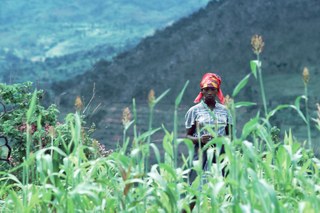 Originally covered by rainforest, farming over the last 2,000 years has stripped Rwanda of much of its natural vegetation. This deforestation has accelerated over the last century. The only significant area of montane/ mountain forest remaining is the Nyungwe Forest in the southwest, the largest mountain rain forest still present in Africa.
Colourful birds
![Regal sunbird, Aviceda at en.wikipedia [CC-BY-SA-3.0 (http://creativecommons.org/licenses/by-sa/3.0)], from Wikimedia Commons](../rwanda/images/regal-sunbird-aviceda-at-en.wikipedia-cc-by-sa-3.0-http-creativecommons.org-licenses-by-sa-3.0-from-wikimedia-commons.jpg "Regal sunbird, Aviceda at en.wikipedia [CC-BY-SA-3.0 (http://creativecommons.org/licenses/by-sa/3.0)], from Wikimedia Commons")
The Regal sunbird (Nectarinia regia), with its yellow, red, blue and green feathers, is as majestically colourful as its name suggests.
The Nyungwe Forest is home to a huge range of tree dwellers, including 13 types of primate. These include chimpanzees, golden and vervet monkeys and three species of bushbaby. The forest’s troops of colobus monkeys are the continent’s largest monkey groups, with up to 400 individuals. The golden cat, duiker (a tiny antelope) and giant forest hog are also residents of the forest.
As well as the amazing animal life, Nyungwe has over 100 species of butterfly and 300 species of birds (from Rwanda’s 670 in total). These include hornbills and wood hoopoe and brightly-feathered turacos and sunbirds.
Rwanda's other key forest conservation area is Volcanoes Park. This is the best place to view the country’s key tourist attraction – the mountain gorillas. See Tourism & Communications to learn about the woman who gave her life fighting to save the gorillas.
Savannah and wetland wildlife
A striking wetland bird
![Papyrus Gonolek, by Tom Tarrant (Own work) [CC-BY-SA-3.0 (http://creativecommons.org/licenses/by-sa/3.0)], via Wikimedia Commons](../rwanda/images/papyrus-gonolek-by-tom-tarrant-own-work-cc-by-sa-3.0-http-creativecommons.org-licenses-by-sa-3.0-via-wikimedia-commons.jpg "Papyrus Gonolek, by Tom Tarrant (Own work) [CC-BY-SA-3.0 (http://creativecommons.org/licenses/by-sa/3.0)], via Wikimedia Commons")
The striking papyrus gonolek (Laniarius mufumbiri) lives in papyrus swamps and wetlands.
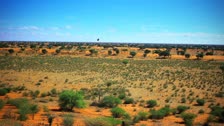
Rwanda’s third main wildlife conservation area lies on the other side of the country. Akagera Park runs down the eastern border. It has the typical savannah landscape of open grassland and acacia woods, as well as a series of lakes, marshes and papyrus swamps.
Akagera’s many waterways are home to an array of birds, including two of the most sought-after local species – the Shoebill stork (see Zambia Geography & Wildlife) and the papyrus gonolek.
Herds of buffalo, zebra and giraffe roam across the park, as well as many different types of antelope. Groups of hippo and elephants also live here, as do warthogs and the rare giant pangolin (an anteater).
Another of Akagera's most impressive residents is the Cape eland, the largest species of antelope.